
18 Sep From Niche to Institutional: The Case for European Self Storage
In this latest Q&A, Bart Rabaey, Mitiska REIM’s Chief Investment Strategy Officer, outlines the unique opportunity we see in next-generation storage…
What’s the investment opportunity that Mitiska REIM sees in next-generation storage?
The European storage market holds immense untapped potential and presents a unique investment opportunity through the combination of growing demand for storage space, within a market which is currently underserved and fragmented.
The sector has proven to be resilient over a range of economic cycles, thanks to its diversified nature. With relatively small buildings and a very broad local customer base, demand is very localized, which mitigates exposure to one specific industry or demographic, and virtually eliminates single tenant risk.
We think storage is strongly positioned to create value over both the short and long term, underpinned by constrained supply, strong tenant demand and positive NOI growth. Furthermore, as an investor, the storage market is capable of generating strong yield on cost, leading to attractive cash-on-cash and returns, which is fueling a growing investor appetite for the asset class.
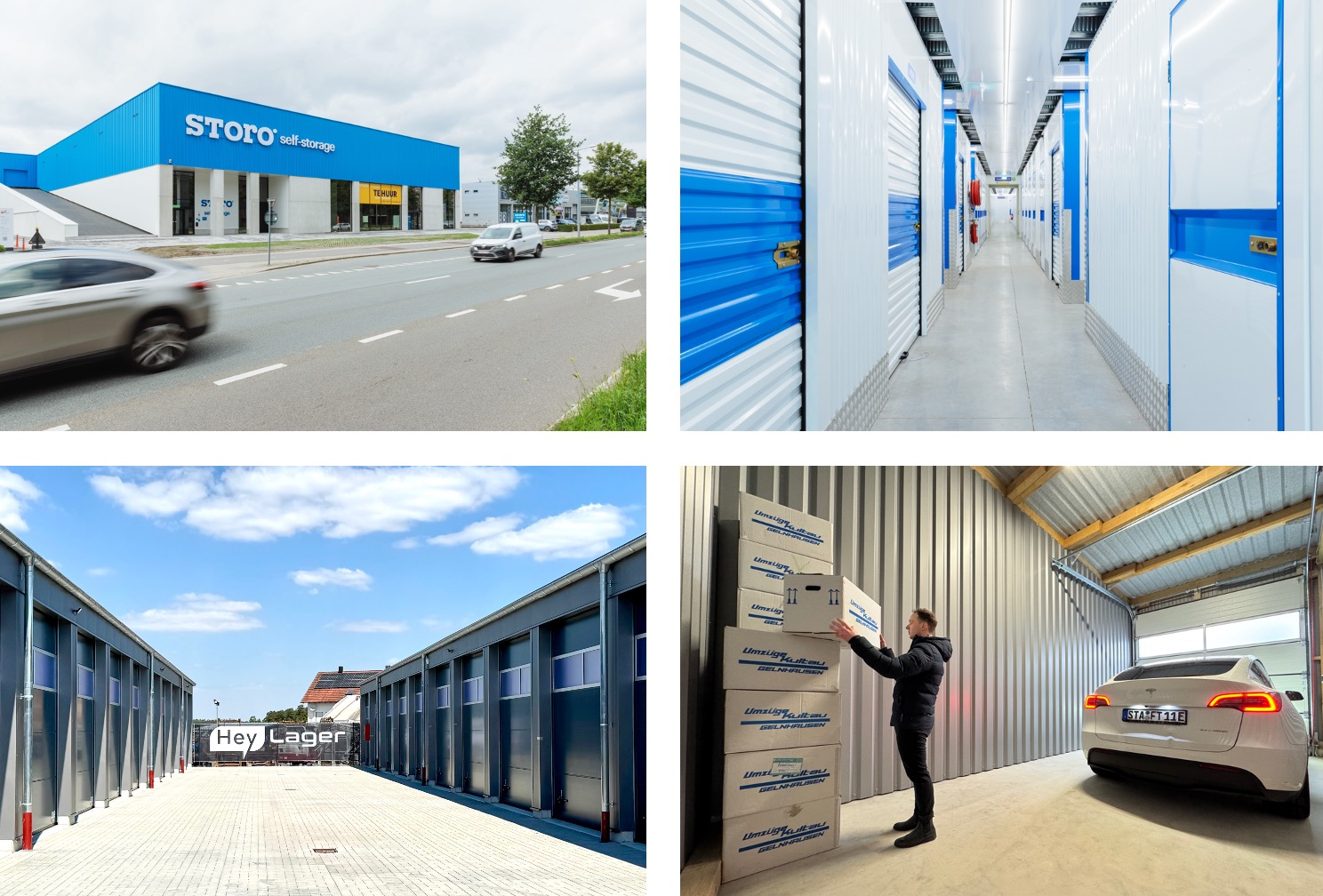
Over the past three years, Mitiska REIM has been an active investor in next-generation storage on behalf of the MEREP 3 fund, through our joint venture partnership with Storo in Belgium, and more recently with our joint venture with HeyLager in Germany.
How has the storage market evolved over recent years?
The European self storage market is still at an early stage of development compared to the UK and the US, creating a clear window of opportunity for investors.
What we’re seeing in the sector is the convergence of several long-term trends – European cities are becoming denser, homes and apartments are often smaller, renters are moving more frequently, and small businesses are needing flexible space for stock and equipment. For consumers, storage is becoming a temporary or even permanent extension of household space, and for businesses, it is a more flexible alternative to a larger warehouse, closely located to their customers in residential areas.
For investors, the European storage market is evolving from a niche warehouse format into an institutional real estate sector according to PERE, where investors are buying not only buildings and land but also operating platforms with brands, digital sales systems, dynamic pricing tools and the ability to scale a network of sites.
The sector offers a strong structural growth opportunity, supported by growing market penetration and consumer awareness, with fragmented ownership and greater potential for both occupancy and rental growth. Savills reports evidence of low churn rates and double-digit Existing Customer Rent Increases (ECRIs), which demonstrates the stickiness of the customer base.

How’s the rollout of the Storo platform progressing?
We recently announced the opening of two new Storo sites in Antwerp and Evere, which brings the total number of Storo facilities in Belgium to seven, with sites also operational in Brecht, Mechelen, Roeselare, Groot-Bijgaarden and Zaventem.
Next year, additional sites will open in Mechelen, Antwerp South and Ghent, with a further pipeline of nine sites ready to be secured. The plan is to at least double the number of Storo sites in Belgium over the next three years.
In terms of selecting and creating new sites, we’re seeing a real opportunity through the refurbishment and repurposing of existing buildings in easily accessible urban locations. Often these are distressed or “stranded” assets like empty offices or showrooms, that can be acquired through off-market deals and then converted into modern, convenient and sustainable self storage facilities, targeting “Very Good” BREEAM certifications.
We’re seeing strong take-up by both consumer and business customers who are attracted to Storo’s next-generation concept, which offers a unique digital booking and onboarding process, a keyless system for units managed on an app, a fully digital automated service and modern sustainable facilities.
How does Storo create a competitive advantage in the market?
Through its fully digital customer journey and tools such as dynamic pricing, Storo captures valuable data across the entire customer lifecycle. This data is continuously used to optimize pricing, sales and operations, while reducing operating costs through its unmanned operating model.
Importantly, unmanned does not mean uncontrolled. Through remote oversight and its integrated Building Management System, Storo maintains full visibility and control over its facilities around the clock. This allows Storo to proactively monitor operations and ensure that every facility remains safe, clean and well maintained at all times.
Combining data-driven decision-making, automation and remote operational control enables Storo to run highly efficient facilities and deliver above-sector EBITDA margins, without compromising on customer experience or operational quality.

How does HeyLager differ from Storo?
Both are next-generation storage operators with digital platforms and high-quality real estate, but HeyLager is a specialist in hybrid drive-up and indoor storage in Germany.
HeyLager develops and operates facilities which offer customers a combination of drive-up and indoor storage units and XXL garages. The net leasable area is generally larger than urban self storage, with units ranging from 4-56 m², and SME units up to 125 m² which provide drive-up storage/office combinations.
Like Storo, the entire customer journey, from booking, onboarding and access, and the management and control of assets, is digitalized end-to-end, providing a premium customer experience while maintaining low operating overheads. Conveniently located on urban arterial roads, the sites are sustainably built using modular timber construction, allowing a ‘plug-and-play’ approach with short build times and a rapid rollout of new locations.
What’s the business plan for HeyLager?
HeyLager currently has seven operational sites in Germany, another five under construction and two in planning. The operating sites are performing well compared to targets, and the constructions are being realized on time and on budget. This provides us comfort to expand the roll-out of the HeyLager concept.
Under our joint venture, which was closed in April 2026, the plan is to develop a further 15-20 sites in Germany over the next two years, with a second phase increasing this to 50 facilities. In the meantime, we already have permits for an additional site, purchase agreements for another two and a robust pipeline for further growth.
What is Mitiska REIM’s plan to expand into other European markets?
Our partnerships with Storo and HeyLager give us real strength and know-how to expand our portfolio of storage assets across Europe, with their best-in-class next-generation platforms a key competitive advantage to capitalize on both the growing demand for storage and the current fragmented marketplace.
We see storage as a natural fit within Mitiska REIM’s convenience real estate investment strategy, targeting the same urban infill locations as retail parks and multi-let light industrial, enabling us to leverage our existing market presence, platform and network.
In line with our successful track record in retail parks over the past 15 years, our plan is to now expand our storage investments internationally to other European markets together with local operating partners, and we are actively investigating opportunities in Portugal, Spain, France, the Netherlands and Poland.
At Mitiska REIM, we believe that the current early-stage opportunities in next-generation storage present a compelling opportunity to unlock value in this dynamic and growing sector of real estate, taking it from a niche to an institutional asset class.
This article is published for general information purposes only and reflects Mitiska REIM’s view of the storage market. It is not an offer, invitation or solicitation to invest. Mitiska REIM’s funds are offered solely by private placement to eligible investors on the basis of their own fund documentation.
This article contains forward-looking statements, targets and third-party market data that are subject to change and to risks and uncertainties; actual results may differ, and past performance is not a guarantee of future results.